 Proudly Made in India


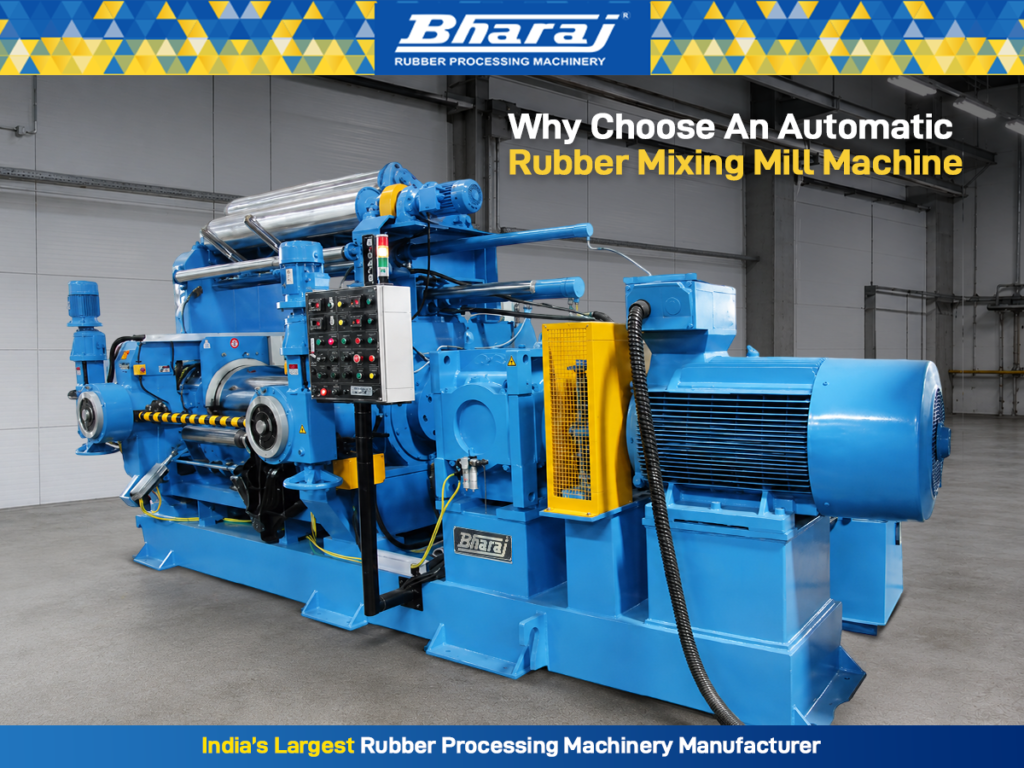
Why Choose An Automatic Rubber Mixing Mill Machine
Have you ever wondered why more rubber manufacturers are replacing traditional systems with automated equipment? The answer lies in the growing need for efficiency, consistency, and safer production environments. An automatic rubber mixing machine helps factories streamline operations while maintaining high product quality and reducing manual intervention.
As global manufacturing continues to evolve, automation is becoming a key investment area. Industry reports indicate that manufacturers increasingly prioritize smart machinery to improve productivity and minimize production errors. In rubber processing, automated solutions offer better control over mixing parameters and support large-scale output. In this guide, Bharaj Machineries will help you understand why upgrading to an automatic system can be a smart move for modern factories.
What Is An Automatic Rubber Mixing Mill Machine?
An automatic rubber mixing machine is industrial equipment designed to blend rubber compounds with additives under controlled conditions. Unlike conventional systems that rely heavily on manual monitoring, automated models use advanced controls to regulate mixing cycles, temperature, and operating parameters.
The primary goal is to produce uniform rubber compounds while reducing variability in the manufacturing process.
Typical applications include the following:
- Tyre manufacturing
- Conveyor belt production
- Automotive rubber components
- Footwear manufacturing
- Industrial sealing products
- Rubber sheet processing
A modern mixing mill improves efficiency by ensuring ingredients are processed consistently, even during high-volume production runs.
Why Are Manufacturers Moving Toward Automation?
The shift toward automation reflects changing industry expectations. Today’s manufacturers must balance productivity, quality, and cost efficiency while meeting growing market demand.
Automatic systems provide a practical solution by improving process control and reducing dependence on operator intervention.
Improved Productivity
One of the biggest advantages of using a rubber mixing machine is increased output.
Automation enables:
- Faster batch processing
- Reduced downtime between cycles
- Consistent operational speeds
- Improved production scheduling
Because the equipment performs repetitive tasks efficiently, manufacturers can process larger quantities without sacrificing quality.
This becomes especially valuable in facilities handling continuous production requirements.
Better Mixing Consistency
Consistency directly affects the performance of finished rubber products.
Traditional systems often depend on operator experience to determine when compounds are adequately mixed. Automated solutions, however, use programmed settings to maintain process accuracy.
A quality mixing mill ensures:
- Uniform ingredient distribution
- Controlled mixing temperatures
- Repeatable batch quality
- Reduced formulation variation
These factors contribute to better product reliability and improved customer satisfaction.
Enhanced Workplace Safety
Safety remains a top priority in manufacturing environments.
Automation reduces direct operator interaction with moving equipment and high-temperature materials.
Key safety advantages include the following:
- Reduced manual handling
- Improved emergency control systems
- Lower exposure to hazardous conditions
- Enhanced operational monitoring
By minimizing unnecessary human intervention, factories can create safer working conditions while maintaining productivity.
Reduced Material Waste
Material waste impacts profitability and sustainability goals.
Automated equipment offers precise control over mixing parameters, helping manufacturers optimize resource utilization.
Benefits include:
- Better ingredient management
- Fewer rejected batches
- Improved process efficiency
- Reduced rework requirements
A properly configured rubber mixing mill helps businesses lower production costs while supporting more responsible manufacturing practices.
Automatic vs Conventional Systems
Feature | Automatic System | Conventional System |
Production Speed | High and consistent | Operator-dependent |
Batch Consistency | Excellent | Variable |
Material Utilization | Optimized | Higher waste potential |
Safety Features | Advanced controls | Limited safeguards |
Manual Intervention | Minimal | Significant |
Scalability | Suitable for expansion | More restrictive |
Is Automation Worth The Investment?
For many businesses, the initial investment may appear substantial. However, long-term operational benefits often outweigh upfront costs.
Manufacturers frequently report improvements in:
- Production efficiency
- Product quality
- Resource management
- Workforce optimization
- Overall competitiveness
As customer expectations continue to rise, investing in automation can help factories remain agile and future-ready.
Key Factors To Consider Before Investing
Choosing the right equipment involves more than comparing prices. The ideal machine should align with your production goals, factory setup, and future expansion plans.
Before making a purchase, evaluate the following factors:
Production Capacity
Assess your daily output requirements and choose a system that can handle current demand while accommodating future growth. Investing in equipment with insufficient capacity can lead to bottlenecks, while oversized systems may increase operational costs unnecessarily.
Automation Features
Modern control systems improve efficiency and simplify operations. Look for features such as:
- Programmable mixing cycles
- Temperature monitoring
- Emergency shutdown mechanisms
- User-friendly control panels
- Data recording capabilities
A high-quality rubber mixing machine equipped with advanced controls helps maintain consistency while reducing operator dependency.
Energy Efficiency
Energy costs significantly influence manufacturing expenses. Machines designed for efficient power consumption can lower operating costs over time without compromising performance.
Maintenance Requirements
Routine maintenance is essential for long-term reliability. Consider:
- Availability of spare parts
- Ease of servicing
- Technical support options
- Equipment durability
Choosing robust machinery reduces unexpected downtime and extends the operational life of the mixing mill.
How To Choose Reliable Rubber Mixing Mill Manufacturers
Selecting the right supplier is just as important as selecting the machine itself. Experienced rubber mixing mill manufacturers understand industry requirements and can provide solutions tailored to specific production needs.
When evaluating potential suppliers, consider:
Industry Experience
Established mill manufacturers often possess deeper technical knowledge and practical insights gained from serving diverse industries.
Manufacturing Standards
Ask about:
- Quality control procedures
- Testing protocols
- Material specifications
- Compliance with industry standards
These factors contribute to dependable machine performance.
After-Sales Support
Reliable support can make a significant difference throughout the equipment lifecycle.
Look for suppliers offering:
- Installation assistance
- Operator training
- Technical guidance
- Prompt service support
Strong after-sales service helps minimize disruptions and maximize productivity.
Why Businesses Trust Bharaj Machineries
In today’s competitive manufacturing landscape, businesses seek equipment partners that prioritize quality, reliability, and customer satisfaction.
They focus on delivering solutions designed to meet evolving industry demands. By combining engineering expertise with a customer-centric approach, the company supports manufacturers looking to improve efficiency and maintain consistent production standards.
Whether upgrading existing facilities or establishing new production lines, manufacturers value partners who understand operational challenges and provide dependable guidance throughout the decision-making process.
Summary:
An automatic rubber mixing machine offers far more than convenience. It enables manufacturers to improve consistency, enhance workplace safety, reduce material waste, and increase production efficiency. As customer expectations continue to evolve, automation has become an important investment for businesses aiming to remain competitive.
While selecting the right rubber mixing mill requires careful evaluation of capacity, features, and supplier capabilities, the long-term benefits often justify the investment. By partnering with experienced providers like us, manufacturers can adopt solutions that support sustainable growth and operational excellence. Investing in modern equipment today can help build a more productive and future-ready manufacturing environment.
FAQs:
What is the purpose of a rubber mixing machine?
A rubber mixing machine is used to blend rubber compounds and additives uniformly, ensuring consistent material quality for manufacturing applications.
How does a mixing mill improve production efficiency?
A mixing mill provides better process control, improves batch consistency, reduces waste, and supports higher productivity through streamlined operations.
Why should manufacturers choose automated systems?
Automated equipment minimizes manual intervention, enhances safety, maintains quality standards, and helps factories achieve more efficient production cycles.
How do I select the right rubber mixing mill manufacturers?
Choose suppliers with proven experience, strong quality standards, reliable after-sales support, and the ability to understand your production requirements.
Is an automatic rubber mixing mill suitable for small factories?
Yes. Many automatic systems are available in different capacities, allowing both small and large manufacturers to benefit from improved efficiency and consistency.
One Response