 Proudly Made in India


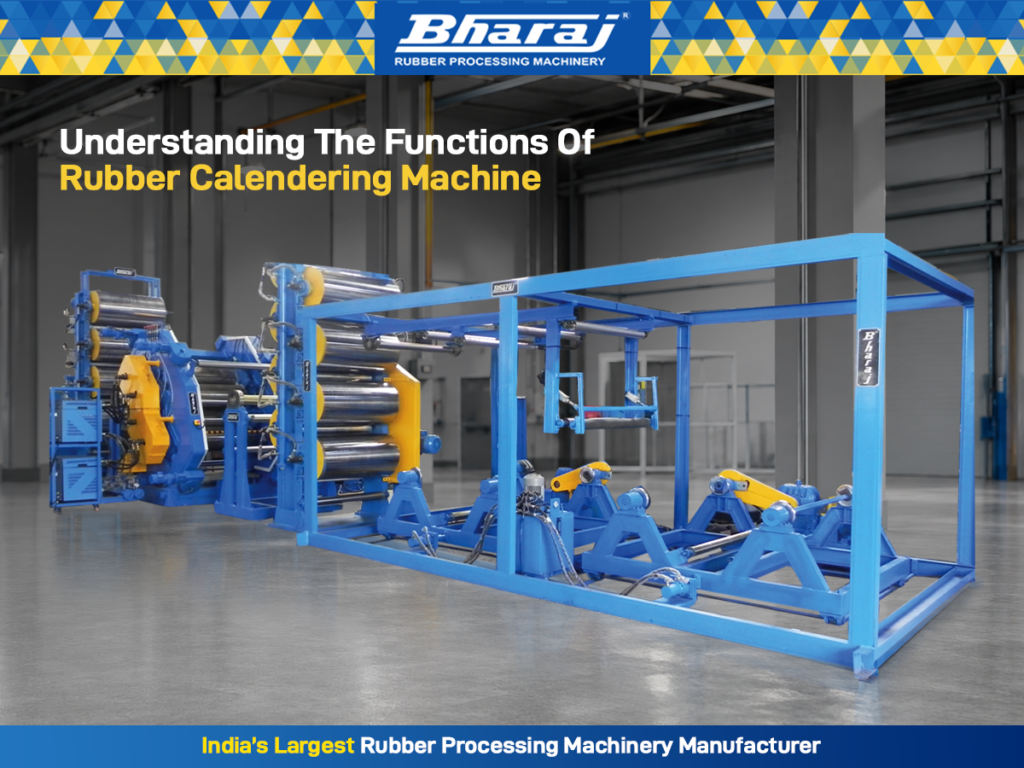
Understanding The Functions Of The Rubber Calendering Machine
What Is A Rubber Calender Machine?
A rubber calender machine is an industrial machine used after the rubber mixing stage to convert refined rubber compounds into sheets or apply rubber coatings onto textile fabrics and reinforcement materials. Instead of blending the compound, the machine focuses on shaping and refining it. The rubber passes through multiple precision-engineered rollers, where controlled pressure and temperature gradually transform it into sheets with uniform thickness and excellent surface quality. Modern machines also support:- Rubber sheeting
- Single-sticking operations
- Double-sticking operations
- Textile topping
- Laminating rubber onto fabrics
How Does A Rubber Calender Machine Work?
Although the process appears straightforward, every stage requires precise engineering. The refined rubber compound enters the machine and passes between multiple rotating rolls. During this process, the material is:- Compressed
- Flattened
- Refined
- Conditioned
- Formed into sheets or coated materials
Major Functions Of A Rubber Calender Machine
A rubber calender machine performs several important functions that directly influence manufacturing quality and production efficiency.Producing Uniform Rubber Sheets
One of its primary responsibilities is producing rubber sheets with highly consistent thickness. Uniform sheets are essential for products such as:- Conveyor belts
- Industrial rubber sheets
- Tire components
- Footwear materials
- Technical rubber products
Removing Air During Sheeting
Air trapped inside rubber compounds can create defects after vulcanization. During the sheeting process, the machine forces out trapped air while compressing the material. This helps manufacturers produce smoother, bubble-free rubber sheets with improved structural integrity and better overall quality.Rubber Coating And Textile Topping
A rubber calender is widely used for applying rubber coatings onto textile fabrics. This process supports the manufacturing of:- Conveyor belts
- Tire reinforcement fabrics
- Rubberised textiles
- Technical industrial fabrics
- Footwear materials
Delivering Superior Surface Finish
Besides shaping the material, calendaring improves the final surface quality. Smooth, evenly finished sheets offer several advantages:- Better appearance
- Improved bonding during later processing
- Greater product consistency
- Higher manufacturing quality
Key Engineering Features Of Heavy-Duty Calendars
Modern rubber processing machinery is designed to deliver precision while operating continuously under demanding industrial conditions. Bharaj Machineries incorporates several engineering features that help manufacturers improve both productivity and product quality.High-Precision Hydraulic Nip Control
The nip is the gap between the rollers where the rubber is compressed. Bharaj Machineries uses high-precision hydraulic nip control systems, with servo-controlled options available for applications requiring even greater accuracy. These systems maintain consistent pressure across the rolls, resulting in uniform sheet thickness and repeatable production quality.Zero Clearance Device
High operating pressure naturally causes slight roll deflection. To compensate for this, Bharaj Machineries integrates a zero-clearance device that maintains uniform pressure across the roll surface. This helps achieve highly consistent sheet thickness while reducing material variation during production.Drilled Roll Technology
Temperature consistency plays an important role in successful calendaring. Drilled rolls provide:- Faster heating control
- Uniform temperature distribution
- Maximum roll rigidity
- Reduced roll deflection
Benefits Of Using A Rubber Calender Machine
Investing in a high-quality calender machine offers more than just sheet production. It helps manufacturers improve product quality, optimize material usage, and maintain efficient production across different rubber applications.Consistent Product Quality
Uniform thickness is one of the biggest advantages of modern calendaring technology. Features such as hydraulic nip control, drilled rolls, and the Zero Clearance Device help produce sheets with minimal variation, ensuring better consistency across every production batch.Better Surface Finish
A properly engineered rubber calender creates smooth and evenly finished rubber sheets. This improves the appearance of finished products while also supporting better bonding during downstream processes such as vulcanization, lamination, or assembly.Reduced Material Waste
Accurate thickness control means less excess material is removed or rejected during production. Consistent processing also helps minimize defects caused by uneven pressure or trapped air, improving overall material utilization.Higher Production Efficiency
Heavy-duty construction, simple operation, and precision controls allow manufacturers to run continuous production with minimal interruptions. This contributes to higher productivity without compromising quality.How To Choose The Right Calender Machine
Choosing the right equipment requires understanding both your production requirements and long-term business goals. While machine size is important, several other factors also influence production efficiency and product quality. Before selecting a machine, manufacturers should evaluate the following:- Daily production capacity
- Type of rubber compounds being processed
- Required sheet thickness and finish
- Roll configuration suitable for the application
- Automation and servo control options
- Maintenance accessibility
- Future expansion requirements
Why Manufacturers Trust Bharaj Machineries
Since 1984, Bharaj Machineries has been designing and manufacturing advanced equipment for the rubber industry. Today, the company serves customers across industries, including tire manufacturing, automotive, silicone, pharmaceuticals, footwear, sports goods, and various rubber-allied sectors. Its product portfolio includes mixing mills, dispersion kneaders, rubber extruders, hydraulic presses, laboratory equipment, batch-off units, and heavy-duty rubber calenders. Every calender machine is designed with features that support consistent production, including:- Heavy-duty construction for long service life
- High-precision hydraulic nip control
- Servo-controlled options
- Zero Clearance Device
- Drilled roll technology
- Multiple roll configurations
- Simple machine operation
Summary
A rubber calender machine plays a vital role in producing high-quality rubber sheets, coated fabrics, and technical rubber products. From removing trapped air during sheeting to delivering accurate thickness and superior surface finish, the machine helps manufacturers achieve greater consistency and operational efficiency. Modern rubber processing machinery continues to evolve with features such as hydraulic nip control, drilled rolls, multiple roll configurations, and zero-clearance devices that improve productivity while reducing waste. Whether manufacturing conveyor belts, tires, footwear materials, or industrial rubber products, investing in the right rubber calender solution helps businesses meet today’s demanding quality standards. With decades of engineering expertise and a commitment to innovation, Bharaj Machineries continues to provide reliable calendaring solutions that support efficient, precise, and long-lasting rubber manufacturing operations.FAQs:
1. What is the primary function of a rubber calendar machine?
Its primary function is to convert refined rubber compounds into uniform sheets or apply rubber coatings to textile fabrics through controlled pressure, temperature, and precision rolling.
2. Why is the zero clearance device important?
The zero clearance device compensates for roll deflection caused by high pressure, helping maintain uniform sheet thickness throughout the production process.
3. Which industries use a rubber calendar machine?
These machines are widely used in tyre manufacturing, conveyor belt production, footwear, automotive components, PVC sheet manufacturing, synthetic rubber processing, and technical rubber products.
4. How do drilled rolls improve production quality?
Drilled rolls provide faster heating control, more uniform temperature distribution, greater rigidity, and reduced roll deflection, resulting in consistent sheet quality.
5. What should manufacturers consider before purchasing a rubber calendar machine?
Production capacity, application requirements, roll configuration, automation options, maintenance needs, precision requirements, and future scalability should all be evaluated before investing in a machine.
One Response