 Proudly Made in India


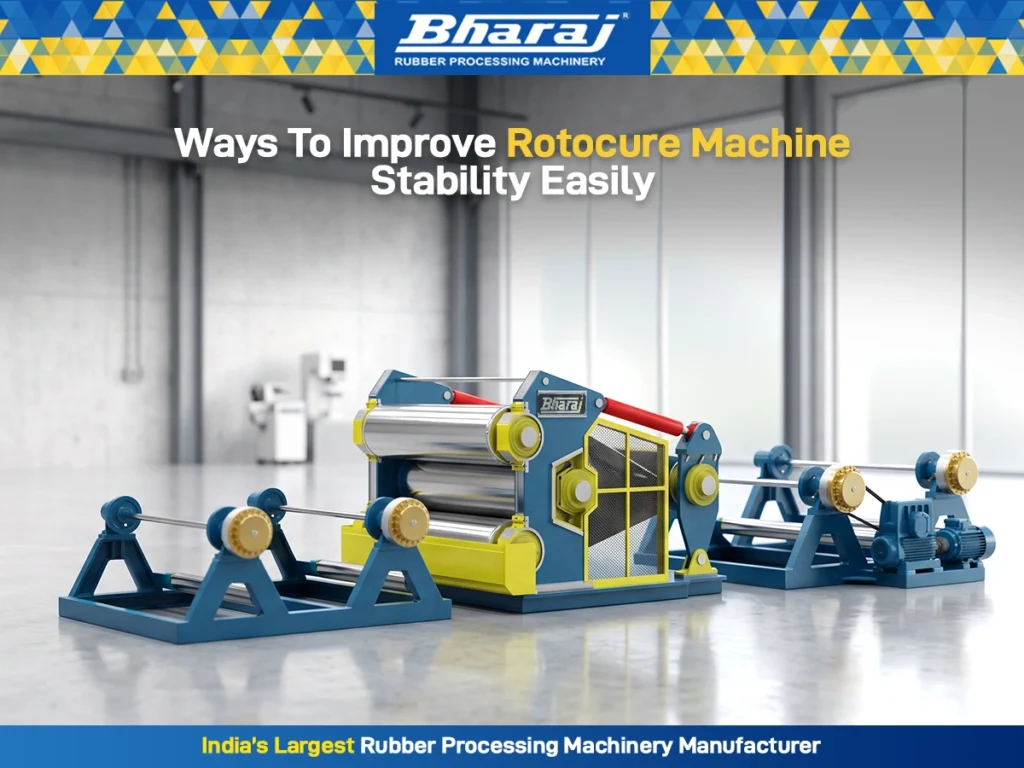
Ways To Improve Rotocure Machine Stability Easily
Why do some rubber manufacturing lines consistently deliver high-quality output while others struggle with uneven curing, production delays, and maintenance issues? In many cases, the answer lies in the stability and performance of the Rotocure machine.
As the rubber industry continues to demand higher efficiency, manufacturers are focusing on equipment optimization to improve productivity and reduce operational costs. A Rotocure system plays a critical role in the continuous vulcanization process, helping manufacturers produce rubber sheets, conveyor belts, mats, and industrial products with consistent quality. Even minor improvements in machine stability can significantly impact output quality, energy consumption, and equipment lifespan.
Bharaj Machineries understands the importance of reliable manufacturing equipment and supports industries with advanced solutions designed for long-term performance. In this guide, we explore practical ways to improve machine stability and enhance operational efficiency.
Understanding The Role Of A Rotocure Machine
It is a continuous vulcanization system used to cure rubber products under controlled pressure and temperature conditions. Unlike batch curing methods, the machine enables continuous production, making it highly efficient for large-scale manufacturing.
The system is commonly used for:
- Industrial and transmission belts
- Rubber-coated fabrics and technical textiles
- Roofing membranes and waterproof rubber sheets
- Sealing plates and gasket materials
- Floor mats and resilient flooring products
- Flat rubber sheets and other continuous rubber products
Because production runs continuously, maintaining stable machine performance is essential for achieving consistent product quality.
Why Stability Matters In Rubber Manufacturing
Machine stability affects far more than equipment performance.
An unstable Rotocure machine can lead to the following:
- Inconsistent curing across the material
- Variations in product quality and finish
- Increased raw material consumption and scrap
- Frequent equipment wear and maintenance needs
- Unplanned production interruptions
- Lower overall manufacturing efficiency and throughput
Improving stability helps manufacturers maintain tighter quality control while maximizing output.
Common Causes Of Rotocure Machine Instability
Before implementing improvements, manufacturers must understand the root causes of instability.
Temperature Variations
Inconsistent temperature distribution can affect curing quality and create defects in finished products.
When heat is not evenly maintained across the machine, manufacturers may experience variations in thickness, hardness, and surface quality.
Belt Alignment Issues
Improper belt alignment can create excessive wear and operational inefficiencies.
Regular inspection ensures smooth movement and reduces stress on machine components.
Inadequate Maintenance
Many stability issues originate from delayed maintenance schedules.
Neglected components often lead to:
- Increased vibration
- Mechanical wear
- Reduced efficiency
- Unexpected failures
Improper Pressure Control
Pressure fluctuations can directly affect curing consistency.
A well-calibrated machine maintains uniform pressure throughout the production cycle.
Practical Ways To Improve Rotocure Machine Stability
Maintain Consistent Temperature Control
Temperature management remains one of the most effective ways to improve machine stability.
Manufacturers should:
- Monitor heating systems regularly
- Inspect temperature sensors
- Calibrate controllers periodically
- Address heating inconsistencies immediately
Stable temperatures contribute to better curing results and improved product quality.
Optimize Belt Tracking Systems
The conveyor belt system must remain properly aligned to ensure smooth operation.
Regular tracking inspections help prevent the following:
- Uneven wear
- Material shifting
- Increased energy consumption
- Production interruptions
Proper belt management significantly improves overall machine reliability.
Schedule Preventive Maintenance
Rather than waiting for problems to occur, manufacturers should implement preventive maintenance programs.
Routine inspections help identify issues before they affect production.
Key areas to inspect include:
- Bearings
- Rollers
- Drive systems
- Hydraulic components
- Heating elements
Preventive maintenance is especially important for facilities operating multiple pieces of rubber processing machinery.
Key Factors Affecting Machine Stability
| Factor | Impact On Performance | Recommended Action |
|---|---|---|
| Temperature Control | Affects curing consistency | Regular calibration |
| Belt Alignment | Influences material flow | Frequent inspections |
| Pressure Stability | Ensures uniform curing | System monitoring |
| Component Wear | Reduces efficiency | Preventive maintenance |
| Lubrication | Minimizes friction | Scheduled servicing |
| Operator Training | Improves machine handling | Continuous training |
Invest In Operator Training
Even the most advanced equipment requires skilled operators.
Proper training helps teams:
- Identify early warning signs
- Follow maintenance procedures
- Optimize machine settings
- Reduce operational errors
Experienced operators play a major role in maintaining machine stability over time.
Monitor Performance Using Data
Modern manufacturing facilities increasingly rely on performance monitoring systems.
Tracking key metrics helps identify trends before they become major problems.
Useful indicators include:
- Temperature consistency
- Energy consumption
- Production speed
- Downtime frequency
- Maintenance history
Data-driven decision-making supports more efficient equipment management.
Upgrade Critical Components For Better Performance
Over time, machine components naturally experience wear and reduced efficiency. While routine maintenance helps extend equipment life, periodic upgrades can significantly improve overall stability.
Manufacturers should evaluate:
- Roller condition
- Drive systems
- Heating units
- Sensors and controllers
- Hydraulic systems
Modern components often offer improved precision and durability, helping the machine maintain consistent performance during demanding production cycles.
Improve Lubrication Management
Lubrication is often overlooked, yet it directly affects machine stability.
Insufficient lubrication can result in:
- Increased friction
- Excessive vibration
- Premature component wear
- Reduced energy efficiency
A structured lubrication schedule helps maintain smooth operation and protects critical moving parts from unnecessary stress.
Best Practices For Lubrication
- Use manufacturer-recommended lubricants
- Inspect lubrication points regularly
- Avoid over-lubrication
- Replace contaminated lubricants promptly
- Maintain maintenance records
Consistent lubrication practices contribute to long-term equipment reliability.
Reduce Machine Vibrations
Excessive vibration is one of the most common indicators of instability.
Vibrations may result from:
- Misalignment
- Worn bearings
- Loose components
- Imbalanced rollers
- Structural issues
Regular vibration analysis can help maintenance teams identify underlying problems before they lead to major equipment failures.
When a Rotocure machine operates with minimal vibration, manufacturers benefit from better product consistency and lower maintenance costs.
Strengthen Quality Control Procedures
Machine stability and product quality are closely connected.
Manufacturers should establish quality control measures that monitor:
- Thickness consistency
- Surface finish
- Curing uniformity
- Material properties
- Production tolerances
Frequent inspections allow teams to detect small deviations early and make corrective adjustments before defects increase.
Facilities using multiple types of rubber processing machinery often achieve better overall efficiency when quality control processes are integrated across production lines.
Leverage Automation And Smart Monitoring
The manufacturing industry continues moving toward automation and predictive maintenance technologies.
Modern monitoring systems can provide real-time information about the following:
- Temperature fluctuations
- Pressure changes
- Energy usage
- Equipment performance
- Maintenance requirements
Automated monitoring reduces human error and enables faster responses to operational issues.
Benefits include:
- Reduced downtime
- Improved productivity
- Better process control
- Longer equipment lifespan
- Lower maintenance expenses
These technologies help manufacturers maximize the performance of every machine within their facility.
Maintain A Clean Production Environment
A clean manufacturing environment supports stable machine operation.
Dust, debris, and rubber residue can interfere with the following:
- Moving components
- Sensor accuracy
- Cooling systems
- Belt tracking mechanisms
Simple housekeeping practices can prevent many avoidable equipment issues.
Cleaning Recommendations
- Remove residue daily
- Inspect rollers regularly
- Keep sensors free of contamination
- Clean ventilation systems
- Follow documented cleaning procedures
Consistent cleanliness contributes to smoother production and improved machine reliability.
Benefits Of Improving Rotocure Machine Stability
Investing in machine stability delivers advantages across the entire production process.
Higher Product Quality
Stable operating conditions produce more consistent curing results and reduce defects.
Increased Production Efficiency
Reliable equipment allows manufacturers to maintain production targets without frequent interruptions.
Lower Maintenance Costs
Preventive improvements help reduce emergency repairs and unplanned downtime.
Extended Equipment Lifespan
Proper maintenance and optimization protect critical components from excessive wear.
Better Energy Efficiency
A well-maintained machine typically consumes less energy while delivering consistent output.
Why Manufacturers In India Trust Bharaj Machineries
Selecting reliable equipment and implementing proper maintenance strategies are both essential for long-term success.
Bharaj Machineries supports manufacturers with advanced solutions designed to improve operational efficiency and production consistency. As an experienced rubber machinery manufacturer, the company understands the challenges faced by modern rubber processing facilities and provides equipment built to meet evolving industry requirements.
Summary
Improving Rotocure machine stability does not always require major capital investment. In many cases, consistent maintenance, proper lubrication, accurate temperature control, operator training, and performance monitoring can deliver significant improvements.
As production demands continue to grow, manufacturers must focus on maintaining reliable equipment that supports efficiency, quality, and profitability. Whether through preventive maintenance programs or modern automation technologies, every step toward greater stability contributes to better operational outcomes.
Facilities that prioritize equipment optimization across their rubber processing machinery can achieve higher productivity, lower costs, and improved product consistency. With the right approach, a machine can continue delivering dependable performance for years to come.
From installation guidance to ongoing support, Bharaj Machineries helps businesses maximize the value of their manufacturing investments while maintaining high performance standards.
FAQs:
1. What Causes Instability In A Rotocure Machine?
Common causes include temperature fluctuations, belt misalignment, inadequate lubrication, component wear, and inconsistent pressure control.
2. How Often Should a Rotocure Machine Be Maintained?
Maintenance schedules depend on production volume and operating conditions, but regular inspections and preventive servicing are recommended.
3. Can Automation Improve Machine Stability?
Yes. Automated monitoring systems help track performance, identify issues early, and reduce human error.
4. Why Is Temperature Control Important?
Consistent temperature ensures uniform curing, which directly affects product quality and manufacturing efficiency.
5. How Does Preventive Maintenance Help?
Preventive maintenance reduces unexpected breakdowns, extends equipment life, lowers repair costs, and improves overall machine reliability.