 Proudly Made in India


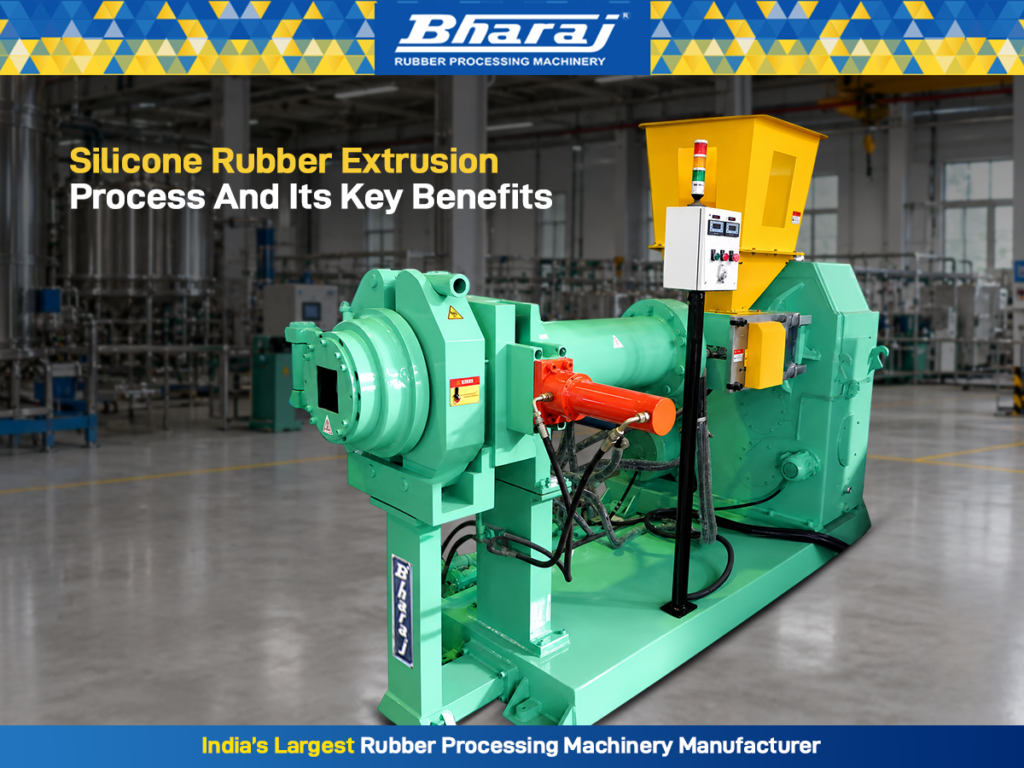
Silicone Rubber Extrusion Process And Its Key Benefits
Have you ever wondered how industries produce flexible silicone tubes, seals, and gaskets with such precision and consistency? The answer lies in the silicone extrusion process, a manufacturing method trusted for creating durable components that perform reliably in demanding environments.
The growing use of silicone across automotive, healthcare, food processing, and electronics sectors has increased the demand for high-quality silicone rubber extrusions. Industry experts note that silicone extrusion remains one of the most efficient methods for producing continuous profiles with excellent dimensional accuracy and minimal waste. In this guide, Bharaj Machineries will help you understand how the process works, why industries rely on it, and the advantages it offers modern manufacturers.
What Are Silicone Rubber Extrusions?
These extrusions are continuous silicone profiles created by forcing silicone compounds through specially designed dies. These profiles can take various shapes and sizes depending on the intended application.
Common examples include:
- Silicone tubing
- Door and window seals
- Gaskets
- Cable insulation
- Medical-grade profiles
- Food-grade sealing strips
Unlike molding processes that produce individual parts, extrusion allows manufacturers to create long, continuous products with consistent dimensions.
One reason industries prefer these extrusions is their ability to maintain performance under extreme temperatures, UV exposure, and challenging operating conditions.
Understanding The Rubber Extrusion Process
At its core, rubber extrusion is a continuous manufacturing technique in which raw elastomeric material is pushed through a die to create a specific cross-sectional shape.
Silicone stands out among other elastomers because of its exceptional flexibility, temperature resistance, and durability. The process allows manufacturers to produce customized components while maintaining efficiency and precision.
The resulting products are widely used in industries that demand the following:
- Dimensional consistency
- Chemical resistance
- Long-term reliability
- Hygienic performance
- Weather resistance
How Does The Silicone Rubber Extrusion Process Work?
Although highly engineered, the process follows a structured sequence designed to ensure product quality.
1. Material Preparation
The process begins by preparing the silicone compound.
Manufacturers select formulations based on the intended application. Factors such as flexibility, hardness, color, and temperature resistance influence material selection.
The compound may include additives that enhance performance characteristics, including:
- Flame resistance
- Improved tensile strength
- Enhanced durability
- Food-grade compliance
- Medical-grade properties
Proper preparation plays a major role in determining the quality of final silicone rubber extrusions.
2. Extrusion Through The Die
The prepared silicone compound enters the extruder, where a rotating screw pushes the material forward under controlled pressure.
As the silicone moves through the machine, it is forced through a precision die that determines the profile shape.
This stage is critical because even slight variations can affect dimensional accuracy.
Industry specialists emphasize that accurate die design significantly improves consistency in extruded silicone rubber products.
3. Vulcanization And Curing
After exiting the die, the newly formed profile remains uncured.
It then passes through a curing system, often using hot air vulcanization or other specialized heating methods.
Curing provides the material with its final properties, including:
- Elasticity
- Heat resistance
- Mechanical strength
- Shape stability
Without proper curing, the performance of extruded silicone rubber can be compromised.
4. Cooling And Finishing
Once cured, the product undergoes controlled cooling.
Cooling stabilizes the profile dimensions and prepares it for finishing operations such as:
- Cutting
- Trimming
- Inspection
- Packaging
These quality checks help ensure that finished products meet application-specific requirements.
Silicone Extrusion Process At A Glance
Process Stage | Purpose | Key Outcome |
Material Preparation | Prepare silicone compound | Desired material properties |
Die Extrusion | Shape the profile | Dimensional consistency |
Vulcanization | Cure the silicone | Strength and elasticity |
Cooling | Stabilize dimensions | Improved accuracy |
Finishing | Inspection and trimming | Quality assurance |
Why Are Silicone Rubber Extrusions Growing In Demand?
Several industries continue to adopt silicone because of its unique characteristics.
Major factors driving growth include:
- Increasing demand for medical devices
- Expansion of electric vehicle production
- Rising food safety requirements
- Growth in industrial automation
- Greater emphasis on durable sealing solutions
Compared with conventional materials, silicone rubber extrusions offer an impressive balance of flexibility and long-term performance.
Key Benefits Of Silicone Rubber Extrusion
Silicone continues to gain popularity because of its ability to perform under demanding conditions. The extrusion process further enhances its value by enabling efficient production without compromising quality.
Excellent Design Flexibility
One of the biggest advantages of these extrusions is the ability to create a wide range of custom profiles. By changing the die design, manufacturers can produce tubing, seals, strips, and complex geometries tailored to specific applications.
This flexibility supports industries that require unique dimensions and performance characteristics.
High Production Efficiency
Compared to many alternative manufacturing methods, this extrusion offers continuous production with minimal material waste.
Key advantages include the following:
- Faster production cycles
- Consistent output quality
- Lower material loss
- Cost-effective manufacturing for long production runs
Industry insights indicate that extrusion remains one of the most economical processes for producing continuous silicone profiles at scale.
Superior Resistance And Durability
Silicone is widely recognized for maintaining its properties under challenging conditions.
Products manufactured through this process provide:
- Excellent heat resistance
- UV and weather resistance
- Chemical stability
- Long service life
- Reliable flexibility
These characteristics make silicone an ideal material for critical applications where durability cannot be compromised.
Applications Across Industries
The versatility of silicone allows it to serve a broad range of sectors.
Common applications include:
Automotive Industry
- Door and window seals
- Wire protection systems
- Engine compartment gaskets
Healthcare Sector
- Medical tubing
- Catheters
- Fluid transfer systems
Food Processing
- Food-grade seals
- Beverage dispensing tubing
- Hygienic processing components
Electronics Industry
- Cable insulation
- Protective sleeves
- Thermal management applications
The growing adoption of these extrusion solutions across industries reflects increasing demand for materials capable of delivering long-term reliability.
Choosing The Right Silicone Extrusion Partner
Selecting a supplier involves more than comparing production capabilities. The right partner contributes to product consistency and operational success.
When evaluating silicone extrusion manufacturers, consider the following factors:
Technical Expertise
Look for companies with experience handling different silicone grades and custom profile requirements.
Quality Control Standards
Reliable suppliers prioritize:
- Dimensional inspections
- Material testing
- Process monitoring
- Final product verification
Manufacturing Capabilities
Reliable suppliers prioritize:
- Dimensional inspections
- Material testing
- Process monitoring
- Final product verification
Customer Support
Strong communication and technical guidance can simplify product development and reduce production challenges.
Experienced silicone extrusion manufacturers understand that precision and responsiveness are equally important in meeting customer expectations.
Why Businesses Choose Bharaj Machineries
As industries seek efficient production systems and dependable solutions, selecting the right equipment partner becomes increasingly important.
Their team emphasis is on delivering machinery solutions designed to support productivity, consistency, and long-term performance. Through a customer-focused approach and engineering expertise, businesses gain access to equipment that aligns with evolving manufacturing demands.
Whether supporting new production lines or expanding existing capabilities, they remain committed to helping manufacturers improve efficiency and product quality in competitive markets.
Summary:
The silicone extrusion process has become an indispensable manufacturing method for producing durable, high-performance components used across multiple industries. From healthcare and automotive applications to food processing and electronics, its ability to deliver consistent quality and design flexibility makes it a preferred choice for modern manufacturers.
The advantages of silicone rubber extrusions extend beyond efficiency. They offer durability, reliability, and customization that support today’s demanding applications. By understanding the process and selecting experienced manufacturing partners, businesses can optimize production while maintaining the highest quality standards. As industrial requirements continue to evolve, silicone extrusion will remain a cornerstone of precision manufacturing.
FAQs:
What are silicone rubber extrusions used for?
They are commonly used to manufacture tubing, seals, gaskets, insulation components, and custom profiles across industries such as healthcare, automotive, and food processing.
How does rubber extrusion benefit manufacturers?
Rubber extrusion enables continuous production, reduces waste, improves efficiency, and provides consistent dimensional accuracy.
What is extruded silicone rubber?
It refers to silicone material that has been shaped through an extrusion die and cured to create continuous profiles with specific cross-sectional designs.
Why should I choose experienced silicone extrusion manufacturers?
Experienced suppliers offer technical expertise, quality assurance, and manufacturing capabilities that help ensure reliable product performance.
Is extruded silicone rubber suitable for extreme environments?
Yes. It maintains flexibility and performance under high temperatures, UV exposure, and harsh operating conditions, making it suitable for demanding applications.